Master the challenge of the Chicken Road game.
The early years of a child’s life are critical for establishing behaviors that can last a lifetime. The Healthy Eating and Sugar Sweetened Beverages manual is specifically designed to assist childcare practitioners, early childhood educators, and care providers in making informed, positive decisions about snack and meal planning. More importantly, it provides a roadmap for avoiding sugary drinks, which are a leading contributor to childhood health issues.
Below you will find a comprehensive guide broken down into four main sections. Use the games, guidelines, recipes, tips, and tools provided here to facilitate an active, healthy environment in your childcare center that nurtures growing bodies and minds.
1. Guidelines: Setting the Gold Standard
Establishing a foundation of health begins with clear, consistent guidelines. These general “gold standard” guidelines, aligned with provincial or territorial regulations, should serve as the blueprint for your childcare center’s nutrition policy.
Understanding nutrition for preschoolers (ages 2-5) requires a focus on nutrient density rather than calorie counting. Children in this age group grow rapidly and have high energy needs, but they have small stomachs.
Key Nutritional Pillars for Preschoolers:
- Variety is Key: Ensure a wide range of vegetables and fruits are offered daily to provide essential vitamins and fiber.
- Whole Grains: Prioritize whole grain breads, pastas, and cereals over refined white flour products to sustain energy levels.
- Protein Sources: Incorporate lean proteins such as beans, lentils, eggs, lean meats, and dairy to support muscle growth.
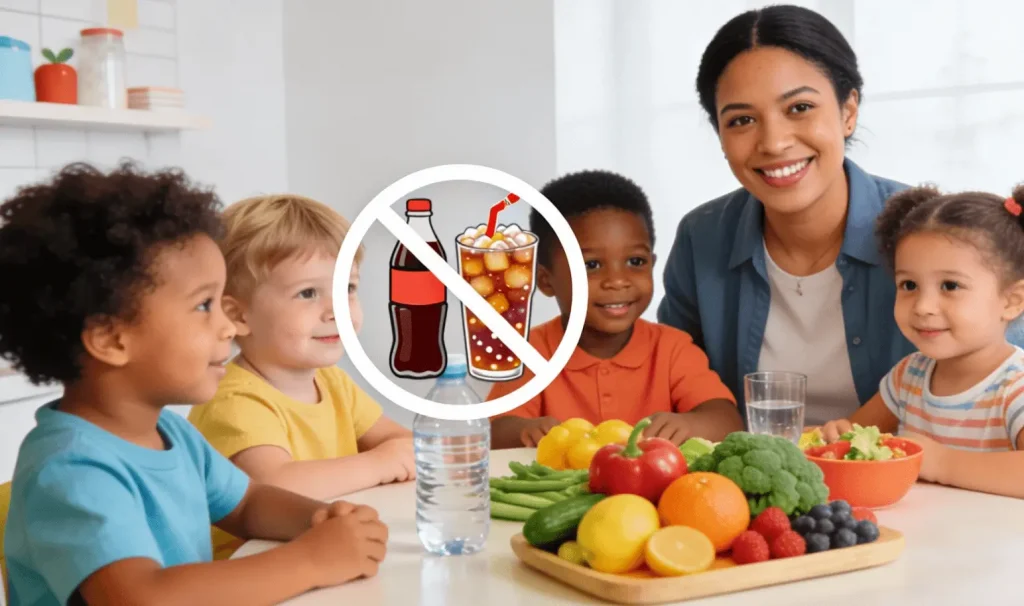
- Hydration: Water and plain milk should be the only beverages served.
2. The Truth About Sugar-Sweetened Beverages
One of the primary goals of the Healthy Beginnings program is to significantly reduce or eliminate the consumption of sugar-sweetened beverages (SSBs). Liquid sugar is often invisible to parents and children, yet it contributes massively to dental decay and unhealthy weight gain.
Many beverages marketed as “healthy” for children are packed with added sugars. Practitioners play a vital role in educating both children and families about these hidden dangers.
Common Sugar-Sweetened Beverages to Avoid:
- Fruit Drinks and Punches: These often contain very little real fruit juice and are mostly sugar water with flavoring.
- Soft Drinks: Carbonated sodas offer zero nutritional value and high sugar content.
- Sports and Energy Drinks: These are inappropriate for young children due to high sugar and caffeine levels.
- Flavored Milks: Chocolate or strawberry milk often contains as much sugar as soda.
The Solution: Make water the standard. Ensure fresh drinking water is accessible to children at all times, both indoors and outdoors. Modeling the behavior of drinking water is one of the most powerful tools a practitioner has.
3. Practices: Applying Knowledge to Daily Routine
This section focuses on the application of guidelines within your center. It is not enough to know what is healthy; practitioners need to know how to implement it. Planning is essential.
Smart Label Reading
To make better choices, practitioners must become experts at reading nutrition labels. The ingredient list is your best friend. Ingredients are listed by weight, so if sugar is in the top three ingredients, the product should likely be avoided.
Watch out for “Hidden Sugars” on labels:
- High-fructose corn syrup
- Dextrose or Sucrose
- Fruit juice concentrate
- Cane sugar or evaporated cane juice
- Molasses or syrup
Engaging Games and Activities
Food education should be fun! We provide resources, games, and activities that integrate nutrition into play. When children interact with food through gardening, cooking, or sensory play, they are more likely to try new things.
- The “Eat a Rainbow” Challenge: Encourage children to eat fruits and vegetables of different colors throughout the week.
- Water Station Decoration: Let children decorate their own water cups or bottles to generate excitement about hydration.
4. Environment: Creating a Culture of Health
This section provides tips on changes to the physical environment that can prompt or reinforce healthy eating practices. The environment includes the physical space, the atmosphere during mealtime, and the messages displayed on walls.
Promoting a Positive Eating Environment:
- Family-Style Dining: Whenever possible, serve meals family-style. This allows children to serve themselves, fostering independence and teaching them to listen to their own hunger cues.
- No Pressure Tactics: Never force a child to clean their plate. This disrupts their natural ability to self-regulate food intake.
- Visual Prompts: Use posters and books that depict healthy foods and water drinking in positive, fun ways.
- Role Modeling: Practitioners should sit with children during meals, eating similar healthy foods and engaging in pleasant conversation, avoiding screens or distractions.
5. Family: Bridging the Gap
These resources will help you support the families of the children in your center. A child’s health journey is a partnership between the care provider and the home. Consistency is crucial for forming long-term habits.
Supporting Parents:
- Newsletters: Use our sample newsletters to share the weekly menu and highlight a “Vegetable of the Month.”
- Policy Sharing: Clearly communicate your center’s policy on sugar-sweetened beverages (e.g., “We are a water-only zone”) so parents know what not to pack in lunchboxes.
- Resource Sharing: Provide parents with easy, affordable recipes that mirror the healthy meals served at the center.
The information in this manual helps increase healthy eating and reduce the consumption of sugar-sweetened beverages. It is meant to be flexible and provide inspiration for creating a healthy, active environment that meets the diverse needs of the children in your center. By targeting guidelines, practices, the environment, and family involvement, we can ensure every child has a healthy beginning.
Grab your exclusive 1win bonus now.