While early learning practitioners and childcare providers play a pivotal role in a child’s development, they only account for a portion of a preschooler’s day. The foundation of a healthy lifestyle is built at home. To foster resilience, physical well-being, and cognitive development in children aged 2 to 5, it is essential for families to adopt a “whole day” approach to health.
This guide bridges the gap between childcare and home life, synthesizing recommendations from Canada’s Food Guide, the Canadian Society for Exercise Physiology (CSEP), and the Childhood Obesity Foundation. By aligning home routines with these best practices, families can ensure their children thrive physically, emotionally, and socially.
The 24-Hour Movement Guidelines for the Early Years
Health is not just about a single workout or a single meal; it is about how a child spends their entire 24-hour day. The Canadian 24-Hour Movement Guidelines integrate physical activity, sedentary behavior, and sleep, recognizing that these elements are interconnected.
1. Move More: Physical Activity Requirements
Preschoolers are naturally active, but they require structured opportunities to move to develop gross motor skills and cardiovascular health.
- Total Activity: Children aged 3-4 years should accumulate at least 180 minutes (3 hours) of physical activity at any intensity spread throughout the day.
- Energetic Play: Within those 180 minutes, at least 60 minutes should be energetic play. This includes activities that get the heart pumping and the child breathing harder, such as running, jumping, swimming, or dancing.
- Skill Development: Focus on fundamental movement skills like throwing, catching, balancing, and hopping. These skills build the confidence necessary for lifelong participation in sports and activities.
2. Sleep Well: Rest and Restoration
Sleep is when the brain processes what it learned during the day and when the body grows. Lack of sleep is linked to hyperactivity, emotional regulation issues, and obesity.
- Duration: Preschoolers (ages 3-4) need 10 to 13 hours of good-quality sleep, which may include a nap.
- Consistency: Consistent bedtimes and wake-up times are crucial for regulating the body’s internal clock.
3. Sit Less: Managing Sedentary Behavior
Sedentary time refers to periods of little to no movement while awake. While reading and storytelling are positive sedentary behaviors, prolonged restraint (like in a stroller or car seat) and screen time should be minimized.
- Screen Limits: For children under 5 years, screen time is not recommended for those under 2. For children aged 2 to 5, sedentary screen time should be limited to less than 1 hour per day. Less is always better.
- Restraint Limits: Children should not be restrained (strollers/seats) for more than 1 hour at a time.
Healthy Eating: Fueling Little Bodies
Nutrition for preschoolers is about providing the energy required for rapid growth and high activity levels. The focus should be on nutrient-dense foods rather than calorie counting.
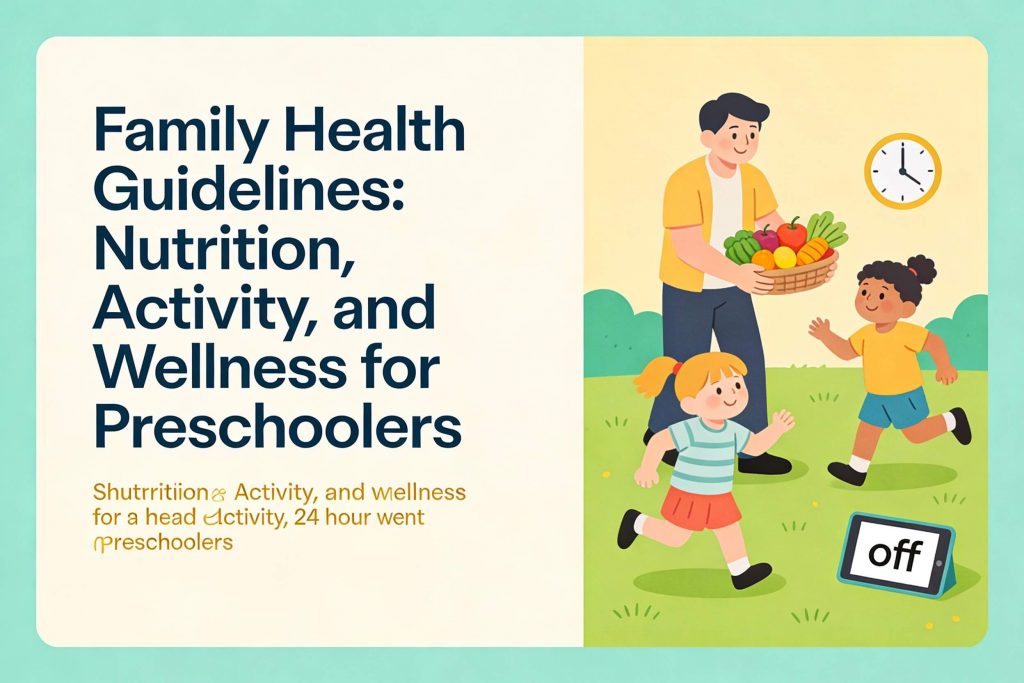
The Modern Approach to Feeding Preschoolers
Following the principles of Canada’s Food Guide, families should focus on the quality of food and the environment in which it is eaten.
- Vegetables and Fruits: These should make up half of the child’s intake. They provide essential vitamins, minerals, and fiber.
- Whole Grains: Choose whole grain pasta, bread, and oats over refined white flour products to provide sustained energy.
- Protein Foods: Include a variety of proteins such as beans, lentils, nuts, seeds, lean meats, fish, and dairy products.
The Division of Responsibility
Feeding a preschooler can be challenging. Experts recommend the “Division of Responsibility” model:
- The Parent’s Job: You decide what food is served, when it is served, and where it is served.
- The Child’s Job: They decide how much to eat and whether to eat at all.
This approach reduces power struggles and allows children to listen to their internal hunger cues.
Eliminating Sugar-Sweetened Beverages (SSB)
One of the most significant actions a family can take for a child’s health is the removal of sugar-sweetened beverages. Liquid sugar is rapidly absorbed, causing insulin spikes, and is a primary driver of dental decay and childhood obesity.
Beverages to Avoid:
- Fruit punch and fruit “drinks” (often 0% real juice).
- Soft drinks and soda.
- Sports drinks and energy drinks.
- Chocolate or flavored milk (high in added sugar).
- Sweetened iced teas.
The Gold Standard:
Water should be the beverage of choice for hydration. Plain milk (or fortified soy beverages) can be offered at meals to provide calcium and Vitamin D. Even 100% fruit juice should be limited (max 1/2 cup per day) or eliminated in favor of whole fruit, which provides fiber.
The 5-2-1-0 Approach for Families
To make these guidelines easier to remember and implement, the Childhood Obesity Foundation promotes the 5-2-1-0 rule. While originally designed for school-aged children, it is highly adaptable for preschoolers (with stricter screen limits).
5: Enjoy Five or More Vegetables and Fruits
Aim for at least five servings daily.
- Tip: Include a fruit or veggie at every meal and snack.
- Tip: Let children pick out a new vegetable at the grocery store to try.
2: No More than Two Hours of Screen Time (Modified: <1 Hour)
For preschoolers, the limit is strictly under one hour.
- Tip: Keep bedrooms screen-free.
- Tip: Use screen time as a shared activity rather than a babysitter.
1: Play Actively for at Least One Hour
This refers to the “energetic play” component of the 24-hour guidelines.
- Tip: Walk to the park instead of driving.
- Tip: Create indoor obstacle courses on rainy days.
0: Zero Sugary Drinks
Make water the norm.
- Tip: Carry reusable water bottles when leaving the house.
- Tip: Infuse water with berries or cucumber for flavor without added sugar.
Creating a Healthy Home Environment
Guidelines are useful, but practical application is where healthy habits are formed. Families are the primary role models for preschoolers. Children are more likely to adopt healthy behaviors if they see their parents and siblings practicing them.
Practical Strategies for Families:
- Eat Together: Family meals promote better nutrition and social-emotional health. Turn off the TV during meals to focus on the food and conversation.
- Cook Together: Involve children in meal preparation. Washing lettuce, stirring batter, or setting the table makes them feel invested in the meal.
- Active Transportation: Whenever possible, walk or bike to your destination. If driving, park further away to get a few extra steps in.
- Routine is Key: Establish a consistent schedule for meals, snacks, active play, and sleep. Predictability helps preschoolers feel secure and reduces behavioral issues.
FAQ: Common Questions from Families
Q: My child refuses to eat vegetables. What should I do?
A: This is normal neophobia (fear of new foods). Continue to offer vegetables without pressure. It can take 10 to 15 exposures before a child accepts a new food. Model eating the vegetable yourself and express enjoyment. Try different preparations—roasted veggies often taste sweeter than steamed ones.
Q: How can I reduce screen time without tantrums?
A: Set clear boundaries and use a timer so the child knows when time is up. Replace screen time with engaging alternatives like building blocks, art supplies, or outdoor play. Be consistent; if the limit is one hour, stick to it daily so the expectation is set.
Q: Is 100% fruit juice healthy?
A: While it contains vitamins, 100% juice is high in natural sugars and lacks the fiber of whole fruit. It is easy to overconsume calories through juice. Water and whole fruit are always the healthier choice. If you offer juice, limit it to 125ml (1/2 cup) per day.
Q: My child doesn’t like sports. How do I get them to be active?
A: Physical activity for preschoolers doesn’t have to mean organized sports. It means active play. Tag, hide-and-seek, playground climbing, dancing to music in the living room, or exploring a nature trail all count. Find what your child enjoys and encourage that.
Q: How much sleep does my 3-year-old really need?
A: They need between 10 and 13 hours per 24-hour period. If they are not napping, they likely need an earlier bedtime. Signs of sleep deprivation in this age group often look like hyperactivity rather than lethargy.
Grab your exclusive 1win bonus now.